With so much to see in downtown Lisbon, it’s easy to see why some people don’t venture further afield. But in this part, we’re going to explore other parts of the city that you won’t want to miss. I’ll share some of Lisbon’s secret history, like the Indian rhinoceros that’s immortalized in a carving on one of Lisbon’s most famous landmarks; and the 18th century palace that was never finished. So, let’s get started.
BELÉM
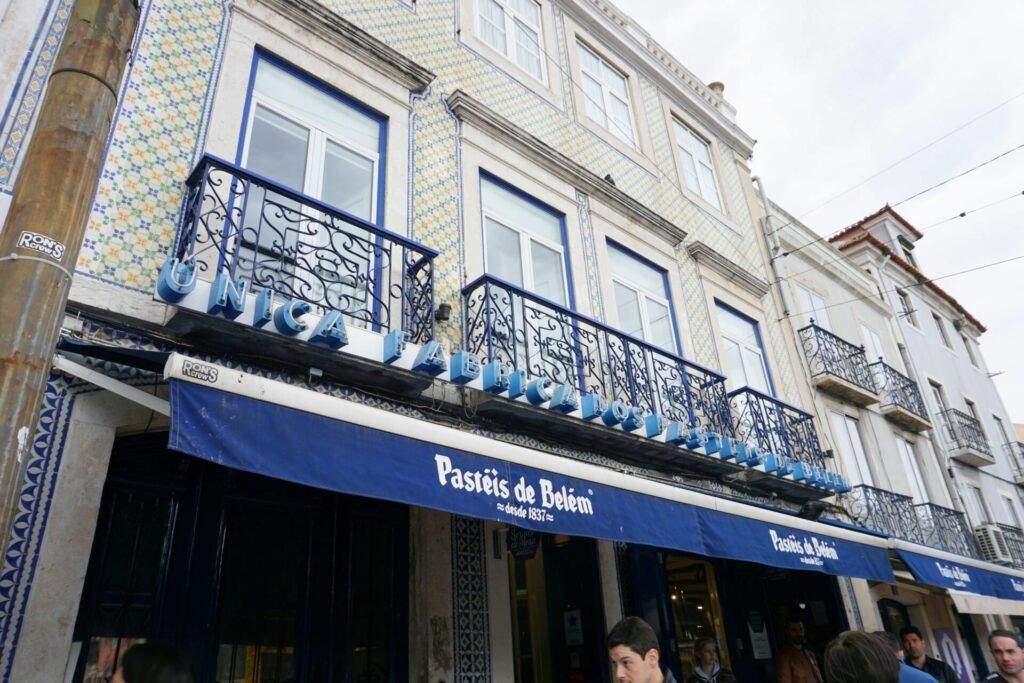
No trip to Lisbon is complete without visiting Belém, which is on the west side of Lisbon, on the banks of the river Tagus. Foodies flock there to taste the world-famous Pastéis de Belém straight out of the oven, in the azulejo-tiled store that’s been baking these tarts using a secret recipe since 1837. Believe me, it’s worth waiting in line to try one. And the best way to enjoy them is to sprinkle a little powdered sugar and cinnamon on the top. But Belém is so much more than custard pastries! It has some of Portugal’s most iconic landmarks.
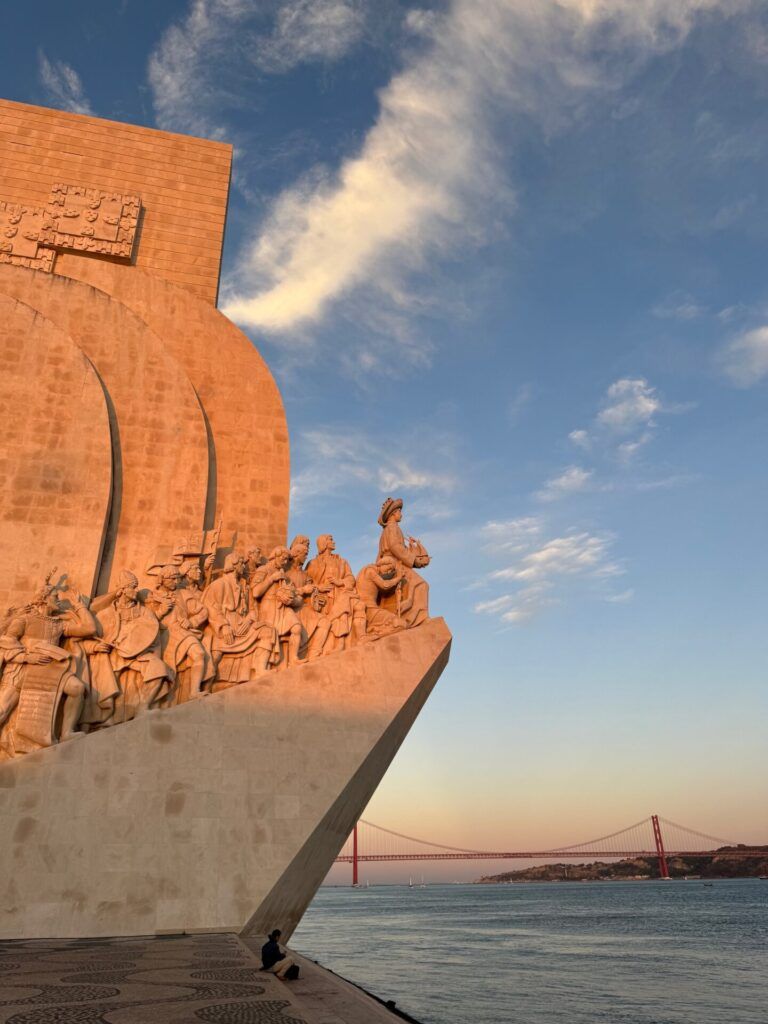
Right on the Tagus river, you’ll find two of the most photographed monuments: the Torre de Belém (the Belém Tower), and the Padrão dos Descobrimentos, the Monument to the Discoveries. You can buy tickets for your preferred date and time slot online for both of these – and during peak tourist times, I recommend you at least check ahead how many tickets are still available on the date you plan to visit.
One of my top tips for avid photographers, or anyone trying to avoid crowds, is to get to the Tower just before sunrise on a clear day. There’s hardly anyone there to get in your shot at that time, and you’ll be able to capture some incredible photos of the sunrise on the river with the Tower in the foreground. Then, make your way to the Padrão dos Descobrimentos, the Monument to the Discoveries. The only downside of going at sunrise is that the monuments are closed so you can’t visit the inside.
BELÉM TOWER
The Belém Tower was built in the 16th century to defend Lisbon from naval invaders. The 16 cannons used to defend the city are still there today. And if you look over to the other side of the river, you’ll actually see the ruins of an even older tower. Any ships that entered Lisbon’s harbor would be within cannon shot of either of them.
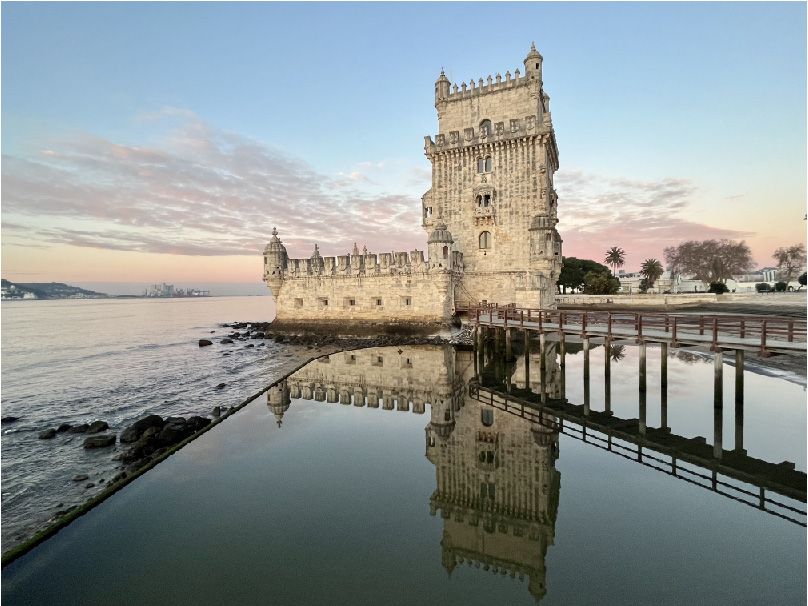
The lower level of the Belém Tower actually became a dungeon for political prisoners during the late 16th and early 17th centuries, a time when Portugal and Spain were ruled as one nation. But don’t let the Tower’s prime real estate deceive you into thinking it wasn’t a bad place to be incarcerated: the dungeon’s ceiling was so low that an adult couldn’t even stand up in there!
And now for that rhinoceros story! In 1514, an Indian king gifted a rhino to Portugal’s king. The poor animal made its way by ship to Portugal, where it was a huge sensation both here and throughout all of Europe. And the hype was justified: there hadn’t been a living rhino on European soil for 13 centuries before this one! The king eventually decided to re-gift the rhino to the Pope as a show of Portugal’s maritime expansion and sent the rhino off to Italy on a ship. But just off the Italian coast, the ship was caught in a storm, and everyone (including the rhino) drowned. The body of the rhino was eventually found, stuffed, and sent to the Pope. But this rare animal made such an impact that its image was carved onto the Belém Tower, where you can still spot him, overlooking the river, to this day. See if you can find him when you visit.
If you happen to venture out to the Alcobaça Monastery in central Portugal (which was built at the same time as the Belém Tower) you’ll find a rhino there too: one of the gargoyles on the roof isn’t a gargoyle, it’s actually a rhino. But let’s get back to Lisbon, and Belém specifically.
MONUMENT TO THE DISCOVERIES
When you visit the iconic Monument to the Discoveries, a little insider knowledge will help you get the most out of the experience. Firstly, each of the 32 figures on the monument is a key person in Portugal’s Age of Discovery, headed by a 30-foot Prince Henry the Navigator, and with ships sails in the background. Secondly, the pavement around the monument is designed to look like waves – not a coincidence! Thirdly, if you go further inland and stand directly behind the Monument, you’ll see the design includes a giant sword right down the middle – something tourists often miss. Lastly, if you look at the ground below you, there’s a giant map in the middle of a large compass rose. It’s made out of different colored limestones, including a rare beige one found only in the Lisbon area. The map shows the year that Portuguese explorers reached different parts of the world. I love that it really helps you visualize how far we went and why it’s such a big part of our history.
MOSTEIRO DOS JERONIMOS
On the other side of the road from the Monument to the Discoveries is Portugal’s most visited tourist attraction: the Mosteiro dos Jerónimos, or the Jerónimos Monastery. Built at the same time at the Belém Tower and the Alcobaça Monastery, Jerónimos is the epitome of Manueline architecture, the defining period of the Age of Discovery in Portugal. These buildings make up three of the seven wonders of Portugal and they’re also UNESCO World Heritage sites.
My advice is to avoid visiting it on a weekend, if possible, especially during the peak tourist seasons of Easter and summer. The lines can get pretty long. The ticketing system is a little strange: you have to buy your tickets at one entrance, and then come out again and wait at another entrance to go in. And speaking of entrances, make sure you check out the original main entrance on the west side of the building – it’s really pretty and you’ll be able to take photos with fewer tourists in the background than at the other entrances.
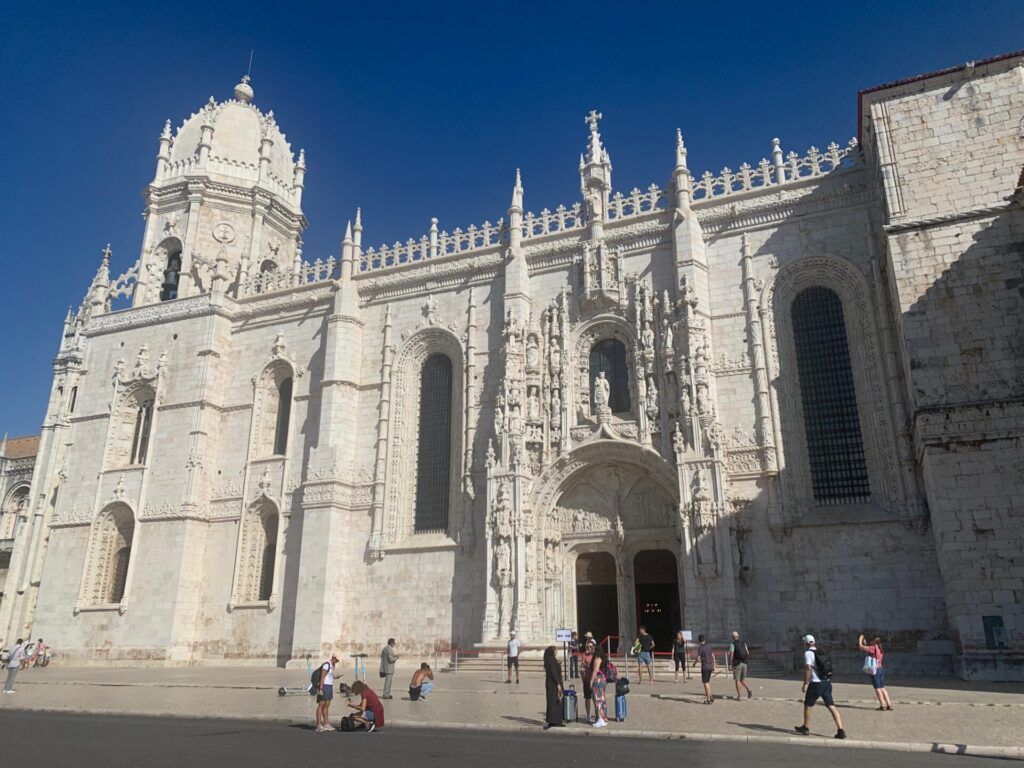
This Monastery took around 100 years to build, and is arguably the most prestigious place for a Portuguese person to be buried. Some of the most renowned figures in our history buried here include King Manuel I (who ordered the building of these monuments), Vasco da Gama, Luis de Camoes, and others. Their stone tombs are incredibly ornate and each one has references to the person’s contributions to the country. For example, Vasco da Gama’s tomb features intricately carved globes, ships, and the Cross of the Order of Christ: which all symbolize his historic journey to India.
But there’s more to the Monastery than just famous historic figures. I recommend you find a guided tour so you know what you’re looking at. Even though the gorgeous courtyard is the most photographed part of the Monastery, don’t leave without stepping into the church. Its high, vaulted ceiling and beautiful altar are absolutely worth the visit. Which leads me to my final tip: avoid visiting the Monastery on a Sunday morning because the church will be closed for mass services until the early afternoon.
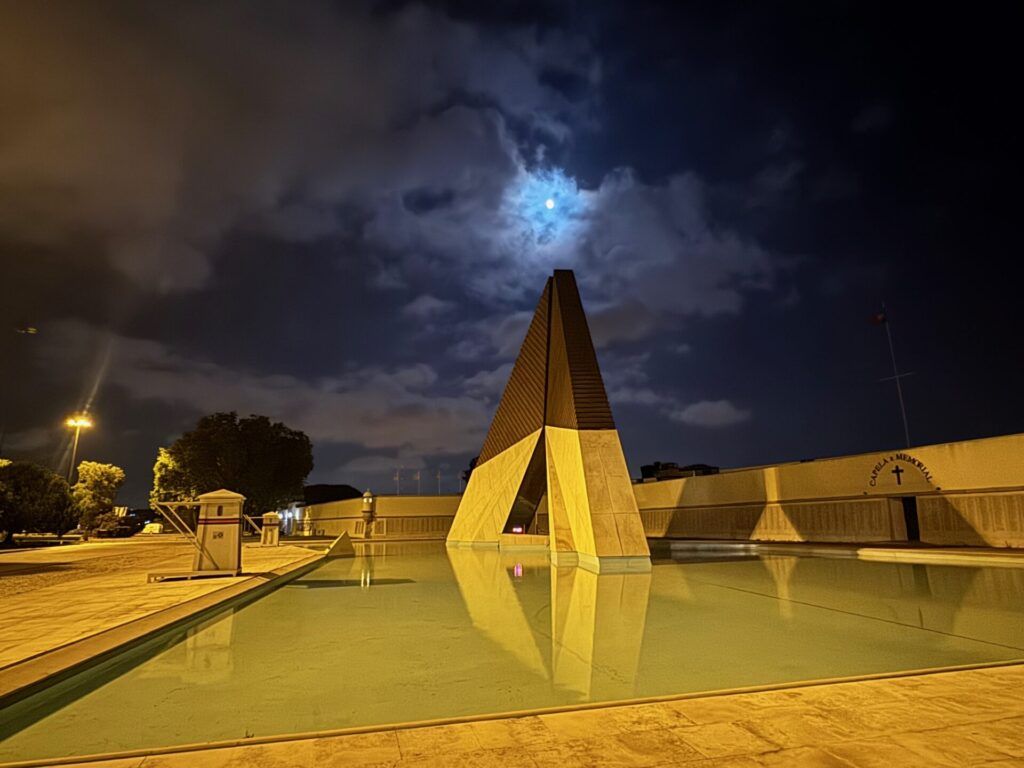
A few more monuments of note in Belém are the Monument to the Overseas Combatants, which is akin to the Vietnam Veterans Memorial in Washington D.C. There’s a museum inside and the tomb of an unknown soldier. With each token entrance fee, you’re donating to a fund for veterans in need and their families.
Right near the Belém Tower, you’ll see a statue of an early airplane. This is the Gago Coutinho e Sacadura Cabral Monument. In 1922, these two Portuguese aviators made the first ever aerial crossing of the South Atlantic, from Portugal to Brazil, with a few stops along the way. Most people walk right past it, but I think that’s only because the other monuments nearby are so much more famous. Take a minute to enjoy this piece of history you almost certainly didn’t know.
If you’re an art lover, you’ll want to check out the Centro Cultural de Belém and the MAAT museum. The former isn’t just an art museum: it also has shows and music performances. The MAAT, or the Museum of Art, Architecture, and Technology is a relatively new addition to Lisbon. It’s only been around since 2016, making it a whopping 497 years younger than the Belém Tower.
For me, walking along the river in Belém on a sunny day is one of the perks of living in Lisbon. Belém has a ton of restaurants and cafés: some more inland, near the Pastéis de Belém store, and others are right on the water. It’s a perfect lunch or dinner spot and I highly recommend finding a restaurant there that’s within your budget. For a swanky dinner, head over to SUD, a real treat. For a mid-high priced meal, try Darwin’s Café. And for a budget meal, head over to the cheap and cheerful Portugália for beer and Portuguese food staples.
Now, let’s leave Belém and head back towards Lisbon, and quickly stop at the docks…
DOCAS
Just past the bridge that looks like a smaller version of the Golden Gate Bridge, you’ll end up at Docas (Portuguese for “docks”). This place is popular with both tourists and locals, so it’s a real mix. There’s an entire row of restaurants and bars on the marina with something for everyone. If you’re traveling with young kids, one of the restaurants, Doca de Santo, has a small but enclosed jungle gym which is great if your kids struggle to sit still for their meal to arrive.
At night, Docas gets pretty busy and even has a karaoke bar and a few clubs for Latin dancing.
PARQUE DAS NAÇÕES
Now, I want to take you to the opposite side of town, to Parque das Nações. This area was completely revamped in the late 1990s in preparation for the World Expo of 1998, the theme of which was “Oceans: a heritage for the future”. Yes, we love to talk about what great navigators we were back in the day… Parque das Nações has a mall named after (you guessed it) Vasco da Gama. If you make your way to the river, you’ll see the European Union’s longest bridge at 7.64 miles – or 12.3 kilometers. And yes… that bridge is also named after Vasco da Gama: the Ponte Vasco da Gama. What we lack in creativity with names, we make up for in consistency.
Parque das Nações is our version of London’s Canary Wharf: modern, clean, and completely different to the historical parts of town. I love walking through the gardens that run parallel to the river. Instead of one long garden, it’s a series of small gardens in a row, each with its own unique theme, sculptures, plants and style. The gardens are right between the river and a row of restaurants, cafés, and bars. If you get hungry or thirsty while you’re exploring, you’ll be spoiled for choice.
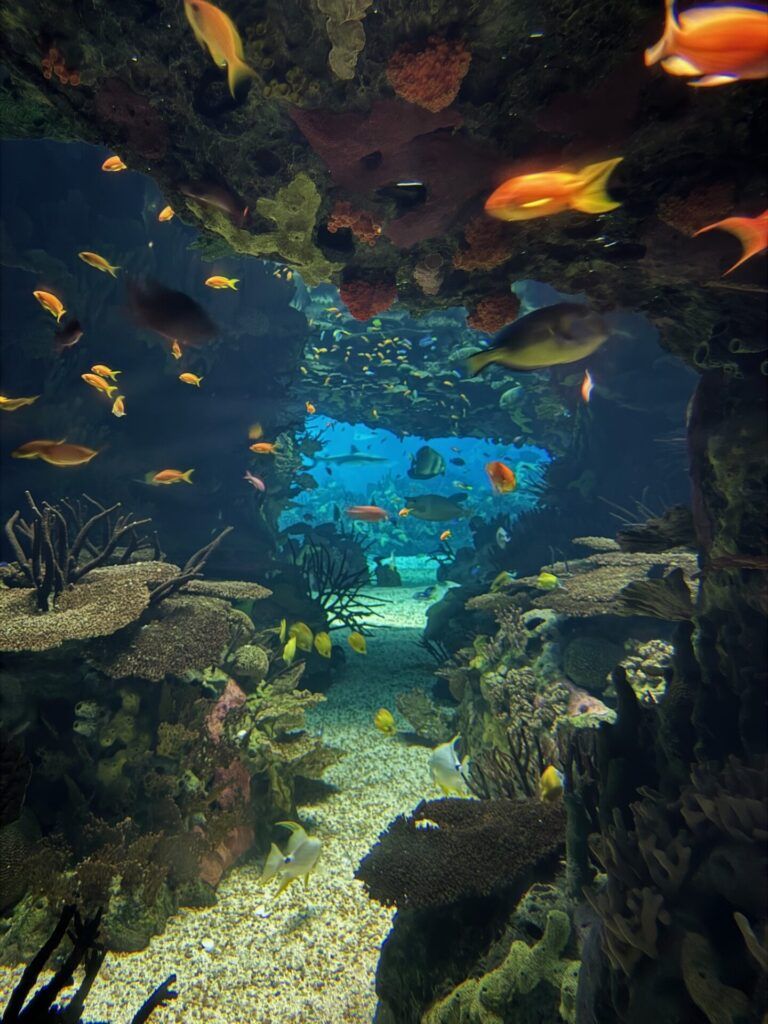
If you don’t feel like walking, take the cable cars from either end. You can get a one-way ticket or a return, for incredible bird’s eye views of the Parque das Nações, the bridge, and the riverfront. One of my favorite attractions in Lisbon is the Oceanarium, right near the south entrance of the cable cars. This truly beautiful aquarium is divided into four oceans (the Atlantic, Pacific, Indian and Antarctic), and two levels (above water level and below) where you can see fish, birds, and mammals that live in those habitats. In the middle is a massive tank that I could just stare at all day, peacefully watching the marine life swim by. And many people do. It’s an attraction for all ages, and one that’s weather-proof in case of rain or extreme heat.
MUSEUMS, GARDENS, & OTHERS
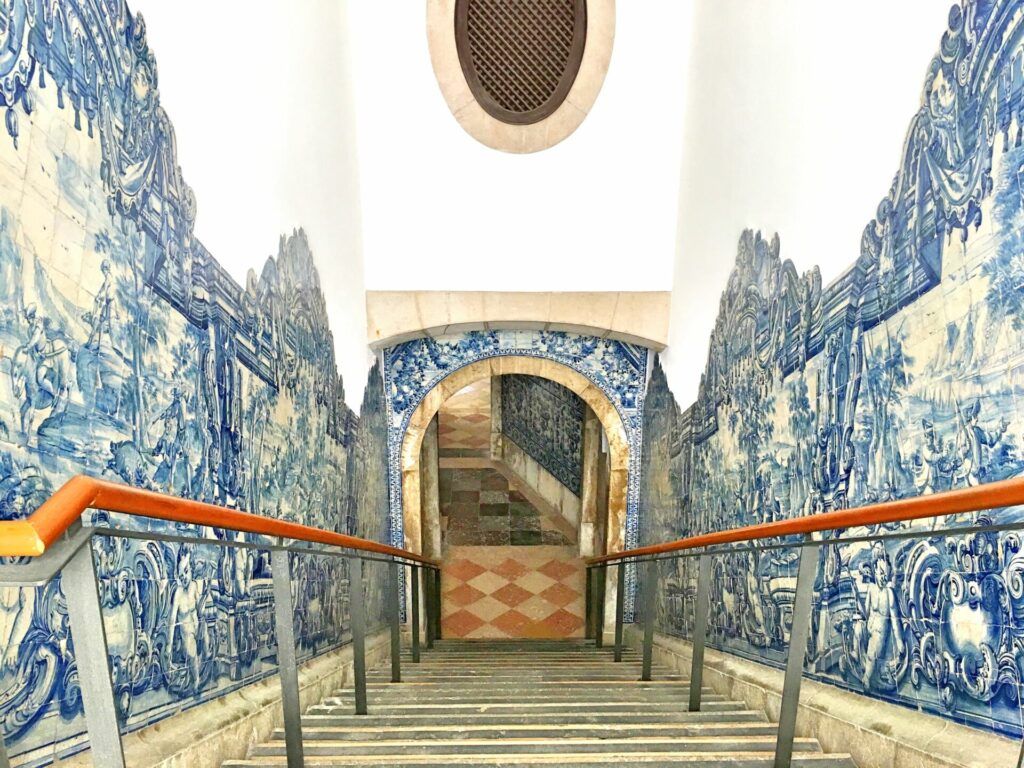
Before I leave you to discover Lisbon for yourself, there are a few more places I want to tell you about. For museum lovers, a truly unique museum in Lisbon is the Museu Nacional do Azulejo: the National Tile Museum. If you’ve fallen in love with the beautiful tiles we have in Portugal, this one’s for you.
Another favorite museum of mine is the Gulbenkian Museum, named after the 20th century oil tycoon and avid art collector, Calouste Gulbenkian. This Armenian Turk was one of the 20th century’s richest people. During WWII, he moved to neutral Portugal, making a hotel his home for several years. In 1956, he set up a foundation for the promotion of the arts and sciences that’s still going strong to this day. He had a fascinating life. But one of his legacies to this country was the museum he set up in Lisbon to house a large portion of his private artworks and artifacts. Amongst the many collections at the museum, my personal favorite is the world’s largest collection of René Lalique’s jewelry and art pieces. For those of you who don’t know Lalique, he’s responsible for introducing the concept of designer perfume bottles. Before him, perfume bottles were all the same shape, regardless of the scent.
Lisbon’s many museums make for a beautiful escape from the midday heat during the summer months.
If you’re looking to go off the beaten track and see how the locals live, there’s a small but pretty park in the Estrela part of Lisbon, called Jardim da Estrela. It even has a playground, which is perfect if you’re traveling with young kids. On certain weekends, there’s a fair where local artisans sell handmade goods. The Basílica da Estrela, right in front of the park, is a gorgeous 18th century church and absolutely worth a visit. And if you’re looking to avoid crowds, this is an area most tourists don’t usually visit.
Another garden that I love is the Estufa Fria. This greenhouse is an unexpected escape from the hustle and bustle of the city, so you can connect with nature a little bit. It’s beautiful, the entrance fee is tiny, and it’s very Instragrammable.
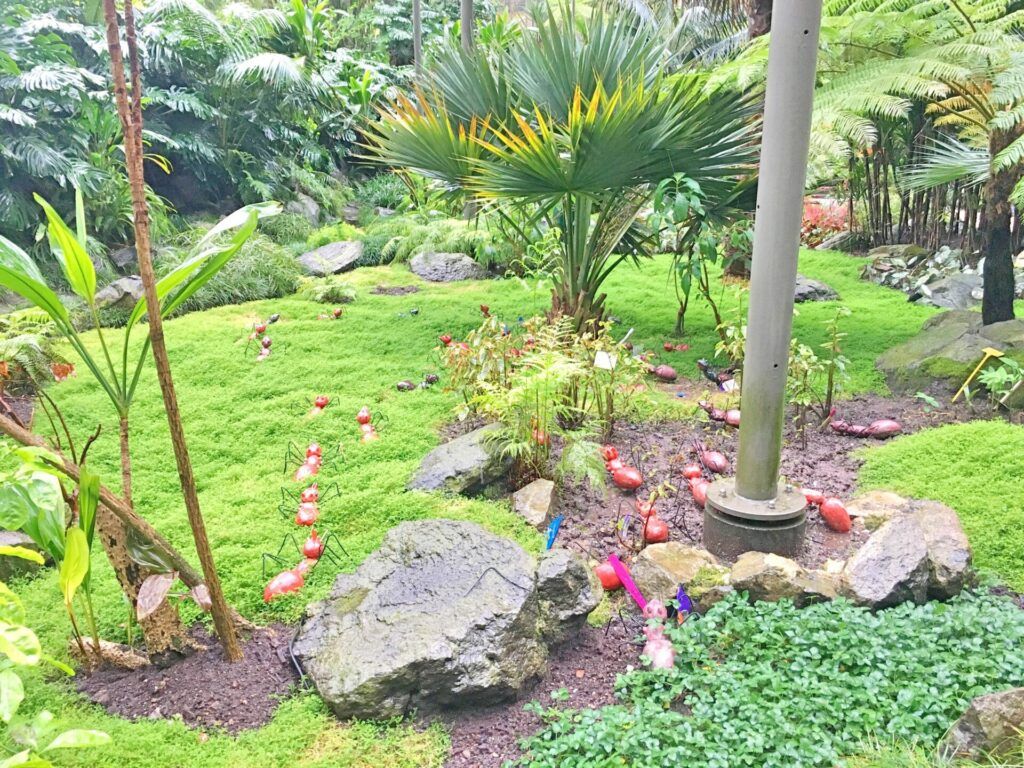
The last botanical garden I recommend is the Ajuda Botanical Gardens: the first botanical garden in all of Portugal. I love that it has different sections for various regions of the world, so you can walk to one part of the garden and be surrounded by plants from far flung places like Australia and New Zealand. Its greenhouses, plants, and fountains are a really pleasant escape from the crowds. And if you’re lucky, you might just stumble across one of the resident peacocks.
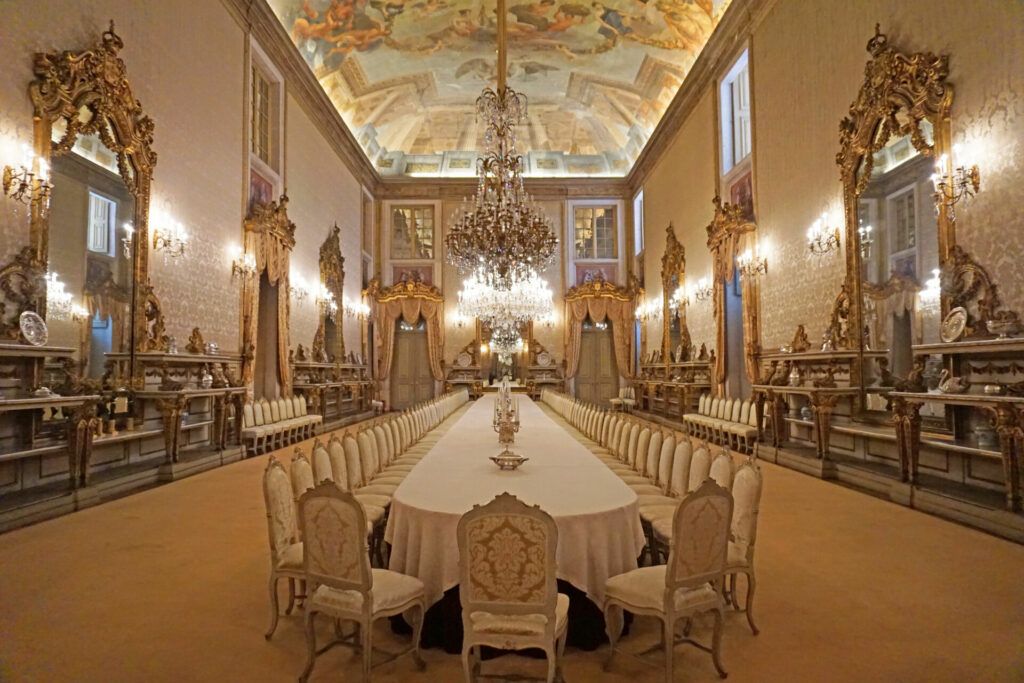
The last stop on our tour is right next door: the Ajuda National Palace. This exquisite palace sits at the top of a hill, overlooking Belém. Amongst the incredible rooms, you’ll see there is my personal favorite, the State Dining Room: important government events are still hosted in this grand and elegant dining room to this day. For my absolute favorite fact about the Ajuda National Palace, check out my blog post on it.
Much like the Ajuda National Palace, your trip to Lisbon may very well feel complete, but also unfinished. There’s always something new to discover, or a new place to explore in this city, even if you’re local. I hope, though, that this episode showed you that venturing outside of Lisbon’s beautiful downtown streets will be rewarding and memorable, and that there’s something for everyone in Portugal’s capital.